


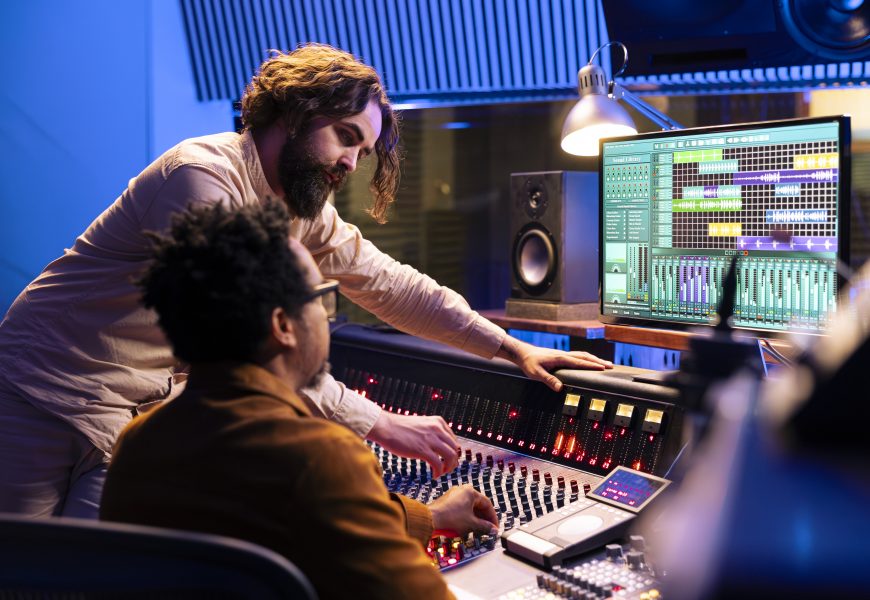
Live sound engineer courses and studio audio courses look alike from the outside, but they lead to different jobs. One puts you behind a mixing desk at concerts. The other puts you in a studio, fixing recordings. Mixing and mastering is the studio side.
In this blog, I’ll cover what a mixing and mastering engineer does, the tools they use, what you learn, who can join, and what it costs. I’ll also compare live sound with studio training and talk about the scope of an audio engineering career in India.
Table of Content
What Does an Audio Mixing and Mastering Engineer Do?
What Is the Difference Between Audio Mixing and Mastering?
Which Tools and Software Are Used for Audio Mixing and Mastering?
What Do You Learn in an Audio Mixing Course?
What Are the Eligibility Requirements for Audio Engineering Certification?
How Much Does an Audio Mixing and Mastering Course Cost?
Live Sound Engineer Courses vs Audio Mixing Courses: What Is the Difference?
What Skills Are Required for an Audio Engineering Career?
What Career Opportunities Are Available in Audio Engineering?
What Is the Scope of an Audio Engineering Career in India?
How Can You Build a Portfolio in Audio Mixing and Mastering?
How to Choose the Right Audio Engineering Course?
Final Takeaway: Building a Career in Audio Mixing and Mastering
FAQs
What Does an Audio Mixing and Mastering Engineer Do?
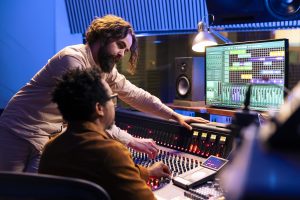
A mixing engineer takes the recorded parts of a song, like vocals, drums, and guitars, and blends them so everything sits well together. They fix the volume, clean up messy sounds, and add reverb, so the song works on a phone and on studio monitors.
The mastering engineer comes after that. They give the finished mix a last polish, so it sounds even and loud enough for streaming, CDs, or radio.
What Is the Difference Between Audio Mixing and Mastering?
They sound alike, but they happen at different stages.
|
Aspect |
Mixing | Mastering |
| Stage | Before mastering |
Final step before release |
|
Works on |
Many separate tracks | One finished stereo file |
| Main goal | Balance and blend every sound |
Polish it and make it consistent |
|
Typical tools |
EQ, compression, reverb, delay |
Limiter, EQ, stereo tools |
Which Tools and Software Are Used for Audio Mixing and Mastering?
You don’t need a big studio to start.
- A DAW like FL Studio, Cubase, Pro Tools, Logic Pro, or Ableton Live
- An audio interface, to get sound in and out of your computer
- Studio monitors or good closed-back headphones
- Plugins for EQ, compression, reverb, and limiting
Learn one DAW properly first.
What Do You Learn in an Audio Mixing Course?
A good audio mixing course starts with the basics of sound, like frequency, decibels and signal flow. Then comes microphones, placement, and recording vocals and instruments. After that you get to the mixing part: EQ, compression, saturation, reverb, delay and modulation.
You only get better by mixing real tracks, so look for a course with projects. AAFT Online’s Diploma in Music Production is a 6-month online program. It uses FL Studio and Cubase, with mentors like Grammy winners Ricky Kej and Nikkhil Beri.
What Are the Eligibility Requirements for Audio Engineering Certification?
Most audio courses don’t have a strict entry test.
- 12th pass is the usual minimum for diplomas
- Most certificates don’t need a music or science background
- Degree programs may ask for certain subjects or an entrance test
- A good ear and patience matter more than marks
How Much Does an Audio Mixing and Mastering Course Cost?
Fees are all over the place. Short certificates can start around ₹40,000, and diplomas run from roughly ₹90,000 to ₹3.5 lakh. AAFT Online’s music production diploma is ₹1,25,000, with NSDC and CII certification, 12 months of recorded sessions and no-cost EMI.
Don’t pick only on price. Check what’s included, like software, mentor time and placement help. And with any audio mixing course, ask what you’ll be able to do by the end.
Live Sound Engineer Courses vs Audio Mixing Courses: What Is the Difference?
Both are about sound, but the jobs feel very different.
|
Aspect |
Live Sound Courses | Audio Mixing Courses |
| Where you work | Concerts, events, venues |
Studios, home setups |
|
Main job |
Run sound in real time | Shape recorded music afterwards |
| Key gear | PA systems, consoles |
DAW, plugins, studio monitors |
|
Pressure |
High, no second chances |
Lower, you can redo things |
Like fast, hands-on work with crowds? Then live sound engineer courses suit you better. If you like detail and quiet focus, go for mixing.
What Skills Are Required for an Audio Engineering Career?
The tools you can learn. These skills take longer.
- A good ear, trained by listening to lots of music closely
- Patience, since one mix can take many tries
- Basic knowledge of acoustics and signal flow
- Taking feedback from artists without getting upset
Build these early and your audio engineering career gets a lot easier.
What Career Opportunities Are Available in Audio Engineering?
Audio skills open more doors than most people think.
- Studio or recording engineer
- Mixing and mastering engineer, in a studio or freelance
- Live sound engineer at concerts and events, which is where live sound engineer courses come in
- Sound designer or audio editor for films, ads, and OTT
What Is the Scope of an Audio Engineering Career in India?
The scope is growing, because there’s more audio content than ever. Streaming, podcasts, audiobooks, OTT, and live events all need people who can handle sound. AAFT’s music production alumni work at places like Pocket FM, Sony Music, Saregama, and Zee Music. explore career opportunities in music production to learn more about the roles available in this growing industry.
Pay depends on your skill and the work you can show. Studio engineer roles at ₹4-5.6 LPA, and sound designers earn ₹4.3-6.1 LPA, while general sources put an average sound engineer near ₹4.5 LPA. An audio engineering career takes a few years to build, though freelancing can speed it up.
How Can You Build a Portfolio in Audio Mixing and Mastering?
Start mixing as soon as you can. Ask local singers and bands if you can mix a song for free or cheap. Remix songs you love, or download free multitrack sessions to practise on.
Put your best five to eight tracks on a simple page or SoundCloud, with a short note on what you did for each. Update it as you improve.
How to Choose the Right Audio Engineering Course?
First, decide what you want to do. If you want concerts and events, look at live sound engineer courses. If you want studios and music, go for mixing and mastering.
Then check who teaches it, because working engineers explain real problems better than someone reading slides. Look at the syllabus, the music production software, the projects, and the support after. And be careful if a course promises you a job.
Final Takeaway: Building a Career in Audio Mixing and Mastering
You get good at mixing and mastering by doing it again and again. Learn the tools, train your ears, and keep a portfolio of real work. An audio engineering career rewards people who stay curious.
Don’t wait for the perfect setup. Mix a track tonight, play it on your phone, in the car and on cheap earphones, then fix what bothers you. That small habit is how most good engineers started.
Frequently Asked Questions
1. Can I learn audio mixing and mastering without prior music experience?
Totally. Most people start with zero music background. What you do need is a trained ear, and you build that by listening to songs you love again and again, noticing what each instrument is doing. Pick one DAW and stick with it.
2. Is an audio engineering certificate useful for freshers?
It helps, but it’s not everything. A certificate from a decent audio mixing course shows you’ve been trained and finished real work. Nobody hires on paper alone. Studios want to hear your mixes. So, learn from the course, then let your portfolio do the talking.
3. Can I become an audio engineer without owning a professional studio?
Yep. Plenty of engineers started in a bedroom with a laptop, a DAW, an audio interface, and decent headphones. A treated room is nice to have, not a must. Once clients start coming in, rent some studio time or borrow a friend’s setup.
4. What computer specifications are needed for music production?
16 GB of RAM, a modern multi-core processor, and an SSD are a safe bet. More RAM helps if you pile on plugins. Look up the minimum specs for your DAW, because each one is different, and keep free storage for sample libraries.
5. Can audio engineers work from home or as freelancers?
Yes, and a lot of them do. Clients just send you files, and you send the finished track back. The tricky part is finding clients, which takes time. That’s why many people keep a day job at the start and freelance on the side.
6. Can audio mixing skills help me work in films, podcasts, and music production?
Yes. The core idea is the same everywhere: balance the sound, clean it up, make it clear. In films, you’d work with dialogue and effects; in podcasts, with voices; and in music, with vocals and instruments. You’ll need a little practice to switch between them.


















Comments (0)