

Finish your board exams, and suddenly everyone wants to know what’s next. If music is where your interest actually lies, that’s a real, legitimate answer, not just a hobby to grow out of. Pursuing a music course after 12th helps students gain the knowledge and practical experience required to build a successful career in this growing industry.
Whether your interest is scoring films, working in gaming audio, cutting ads, producing podcasts, or putting out your own tracks, there’s a course out there that fits. Production, sound engineering, composing, editing. These fields ask for both an ear and a set of technical chops, and the right training gets you both.
- Why Choose Music Courses After 12th?
- Types of Music Courses After 12th
- Eligibility Criteria for Music Courses After 12th
- Admission Process for Music Courses
- Popular Music Specializations
- Music Course Duration and Fees
- Skills Required to Build a Career in Music
- Top Career Opportunities After Music Courses
- Top Recruiters for Music Graduates
- Salary After Completing Music Courses
- Future Scope of Music Careers in India
- How to Choose the Right Music Course After 12th?
- Why Choose AAFT Online for Music Courses?
- Frequently Asked Questions
- Which music course after 12th offers the best career opportunities?
- Can I pursue a music degree course program after 12th without any formal training?
- What skills are essential to build a successful career after completing music courses?
- Are online music courses after 12th recognized by employers?
- Which industries hire graduates after completing music courses?
- Can I become a music producer after completing a music course?
Why Choose Music Courses After 12th?
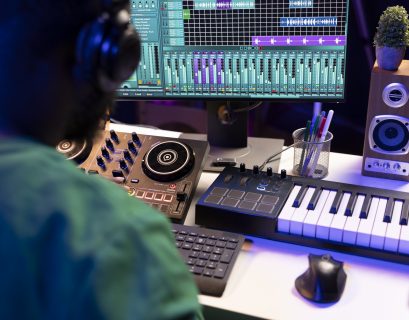
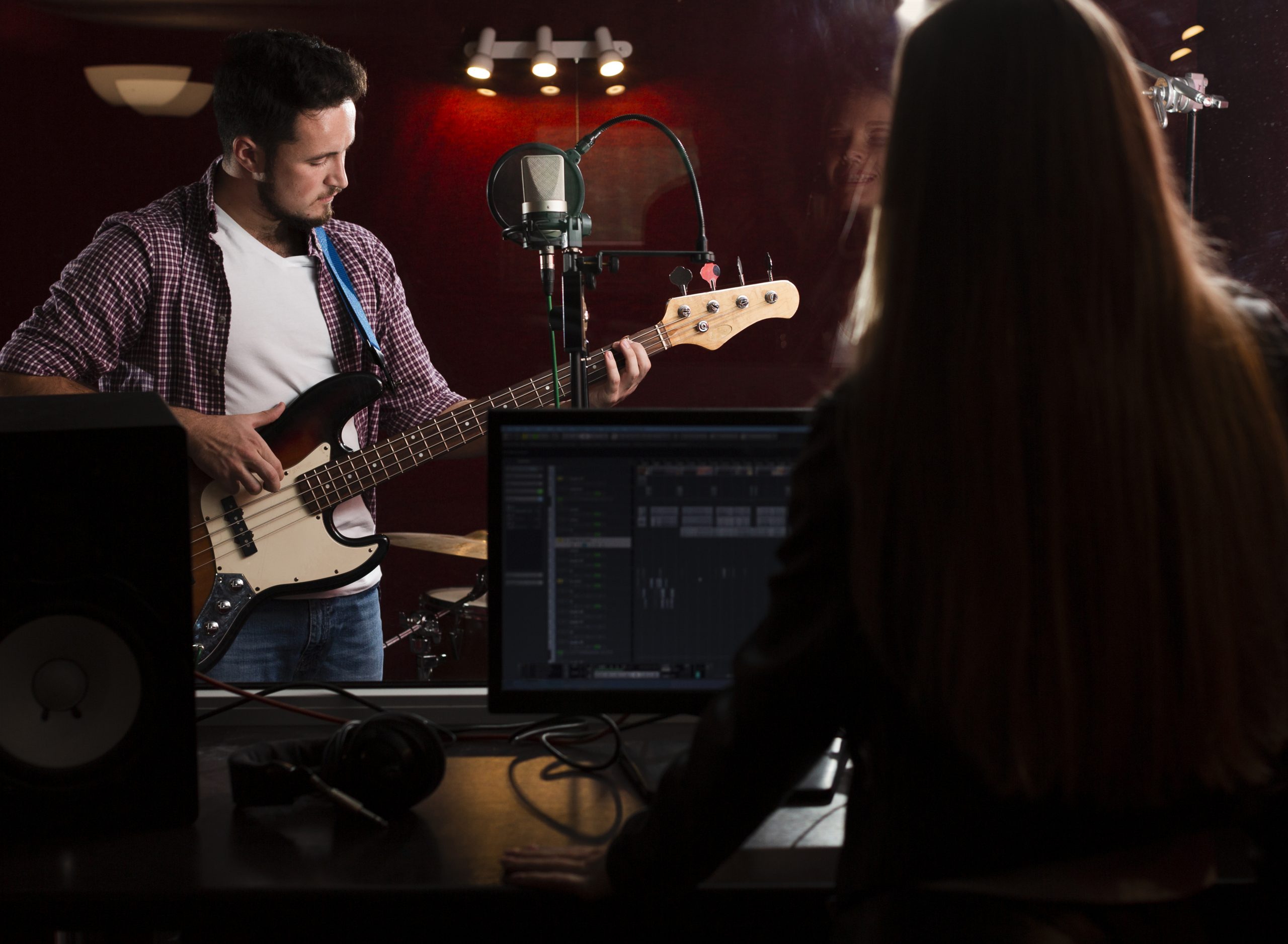
Because “I’ll just figure it out myself” only gets you so far. A music course after 12th allows you to turn your passion into a profession. These programs teach the creative and technical sides together, so you leave with skills employers actually look for, not just vague enthusiasm. Choosing a music production course after Class 12th also gives students practical exposure to recording, mixing, sound design, and music software used by professionals.
Streaming didn’t just change how we listen to music; it changed who gets hired. Independent artists, podcast studios, game developers, and content creators all now need people who know their way around a digital audio workstation (DAW). Courses at this level typically cover theory, recording, sound design, mixing, mastering, and the software stack the industry runs on, helping students Master the Art of Music Production and walk into real projects instead of learning on the job from scratch.
Types of Music Courses After 12th
Not every student wants the same thing out of a music education; some want to be in a studio within six months, others are happy to spend four years on it.
- Diploma Courses: A diploma in music is ideal for students who want practical, skill-focused learning in a shorter duration. These courses emphasise hands-on training and industry applications.
- Degree Programs: Music degree courses provide an in-depth understanding of music theory, performance, composition, and technology. They suit students who want the fuller academic route.
- Certificate Courses: Short, focused programs that introduce beginners to the fundamentals of music and production.
- Specialised Programs: For students who already know they want production, sound engineering, composition, or audio tech specifically, and want to go deep rather than broad.
Which one fits depends on your goals, how much time you can give it, and honestly, how patient you are.
Eligibility Criteria for Music Courses After 12th
Requirements shift a bit from one institute to the next, but the broad strokes are usually the same:
- You need to have finished Class 12 from a recognised board.
- Your stream doesn’t matter much: Science, Commerce, Arts students all get considered.
- Some places run an aptitude test or interview to gauge genuine interest and creative sense.
- Prior music knowledge helps but isn’t a dealbreaker for most beginner programs.
Still, check the specific criteria at whichever institution you’re eyeing before you apply; policies do vary.
Admission Process for Music Courses
Nothing too complicated here:
- Fill in the online application.
- Submit your academic documents.
- Sit for an entrance test, portfolio review, or interview, if the program requires one.
- Get your admission offer.
- Pay fees and enrol.
Some colleges skip the test altogether and admit directly based on your Class 12 marks, depending on the program.
Popular Music Specializations
The industry isn’t just “musician” or “not musician” anymore; there are a dozen lanes to pick from: production, sound engineering, composition, songwriting, audio engineering, live sound, music business, film scoring, and more.
If digital content is more your speed, podcast production, background scoring, and audio post-production are worth a look. Picking a lane early tends to sharpen your skills faster and makes your resume easier to place. Students interested in studio recording and audio production can also choose a music production course to develop industry-ready technical skills.
Music Course Duration and Fees
This varies more than people expect. Certificate courses might wrap in a few months. Diploma courses generally run six months to a year. A full undergraduate degree is typically three to four years.
Fees swing with curriculum, faculty, format, and how much hands-on training is built in. Don’t shop on price alone; compare what you’d actually be learning, the exposure you’d get, and what kind of career support comes with it.
Skills Required to Build a Career in Music
Talent gets you in the door; these keep you in the room:
- Creativity and a willingness to try things that might not work
- A working grasp of rhythm and music theory
- Communication, you’ll be collaborating constantly
- Patience (mixing a track can eat an entire afternoon)
- Problem-solving when the session isn’t going as planned
- Comfort with recording software
- An ear for detail
- Decent time management
- Willingness to keep up with new tools
Students enrolled in classes for music production to Learn Music Production also develop practical skills by working on real-world assignments and creative projects. That kind of repetition is really what builds confidence in a studio setting.
Top Career Opportunities After Music Courses
Finishing a program opens up more doors than people assume:
- Music Producer
- Sound Engineer
- Audio Editor
- Music Composer
- Mixing and Mastering Engineer
- Background Score Composer
- Podcast Producer
- Music Programmer
- Recording Engineer
- Live Sound Technician
- Independent Music Artist
- Music Instructor
The growing career opportunities in music production and demand for digital content has also increased opportunities across OTT platforms, gaming, advertising agencies, radio, and podcasting, making music production jobs more accessible than ever.
Top Recruiters for Music Graduates
Record labels, production houses, radio stations, OTT platforms, podcast companies, gaming studios, event firms, and ad agencies all bring music professionals on board. Names like Sony Music, Saregama, Zee Music Company, T-Series, Pocket FM, Kuku FM, AIR (All India Radio), Spotify, and Wynk Music show up regularly in this space, alongside plenty of independent studios.
Freelancing has also picked up quite a bit; original content is in demand, and that’s opened the door for professionals to work with artists and brands well beyond their home city, sometimes internationally.
Salary After Completing Music Courses
This depends heavily on your skills, your portfolio, and the role you land. Freshers typically start somewhere between ₹3 LPA and ₹5 LPA in roles like music producer, sound engineer, or audio editor. Build up experience and a solid portfolio, and ₹6–12 LPA (or beyond) becomes realistic.
Independent producers, composers, and freelancers often stack on extra income through client work, collaborations, streaming royalties, and live gigs. Professionals who complete a specialised music production course and continuously upgrade their skills often have better earning potential as they gain experience.
Future Scope of Music Careers in India
The industry here has shifted a lot in the last few years. Streaming, podcasts, gaming, social media, and a wave of independent artists have all pushed up demand for trained professionals.
A few trends worth watching:
- More original music being commissioned for films, OTT shows, and web series
- Podcast production and audio storytelling growing steadily
- Gaming and animation studios needing sound designers and composers
- Independent musicians and digital creators gaining real traction
- More collaborations happening remotely, across borders
Technology keeps lowering the barrier to entry, so students who keep learning tend to build careers that aren’t limited to India alone.
How to Choose the Right Music Course After 12th?
Don’t just look at duration or fees. Look at the curriculum, how much hands-on practice you’ll actually get, who’s teaching, and what industry exposure and career support look like on the other side.
Placement assistance, certifications, alumni outcomes, mentorship; these tell you more about a program’s real value than a shiny brochure will. The best courses combine practical work with genuine industry guidance, not just lectures.
Why Choose AAFT Online for Music Courses?
If you are looking for professional classes for music production, AAFT Online offers a Diploma in Music Production designed to help students develop practical, industry-relevant skills.
Students work on multiple hands-on projects to build a real portfolio, guided by mentors including Grammy Award-winning musician Ricky Kej and music producer Nikkhil Beri. The program includes one-on-one mentorship, recorded sessions for flexible learning, and NSDC & CII certifications to back up your profile.
Frequently Asked Questions
Which music course after 12th offers the best career opportunities?
It depends on where your interest lies. If production and audio tech appeal to you, a specialised diploma or degree program with strong practical training and real projects is usually the better bet.
Can I pursue a music degree course program after 12th without any formal training?
Yes, most institutions accept complete beginners straight out of Class 12. Some background helps, but plenty of programs are built to start from zero.
What skills are essential to build a successful career after completing music courses?
Creativity, a handle on theory, communication, comfort with audio software, problem-solving, teamwork, and a willingness to keep learning tend to matter more than any single talent.
Are online music courses after 12th recognized by employers?
Generally, yes. Employers care more about your skills, portfolio, and certifications than whether you learned online or in person, especially if the program included real projects and mentorship.
Which industries hire graduates after completing music courses?
Film, television, OTT, advertising, gaming, podcasting, radio, event management, record labels, and independent studios all hire from this pool.
Can I become a music producer after completing a music course?
Yes, provided the program gave you real practical training, exposure to industry-standard software, and some live project experience. From there, it’s mostly about building your portfolio and continuing to sharpen your skills.