


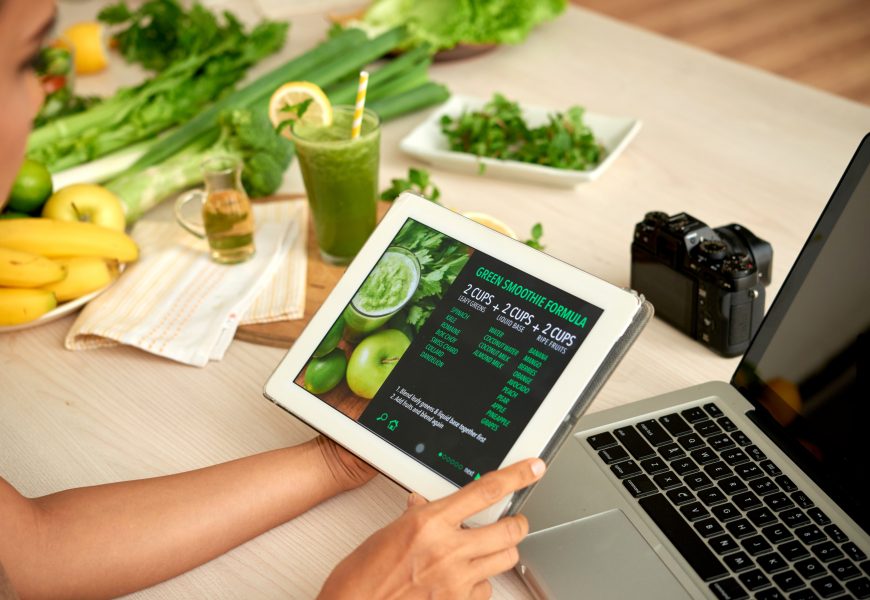
An AI diet planner is a tool that builds meal plans in seconds based on your age, weight, goals, and food habits. It can help with ideas and tracking, but it can’t replace a trained nutritionist, especially for medical conditions. Think of it as a helpful assistant, not a doctor. The future belongs to professionals who understand both food science and these tools. If you want a career here, learn the fundamentals first, then add AI skills on top of them.
Type your weight and your goal into an app, and a full week of meals appears before your tea gets cold. Breakfast, lunch, snacks, dinner, all neatly counted in calories. It’s impressive, and it’s also why so many people now trust these plans without asking who, or what, built them. A meal plan is only as good as the thinking behind it, and that’s where trained nutrition professionals still matter.
In this blog, we explain how these tools actually work, where they help, where they fall short, and what future nutrition professionals need to learn. We also look at what a good course covers, which careers are opening up, and how to choose a program without wasting a year.
Table of Content
What Is an AI Diet Planner and How Does It Work?
How Is Artificial Intelligence Transforming Applied Nutrition and Dietetics?
How Does AI Help Create Personalised Nutrition Plans?
What Are the Different Applications of AI in Nutrition?
What Is the Role of an Artificial Intelligence Nutritionist?
What Are the Benefits and Limitations of AI-Based Diet Planning?
How Is AI Being Used in Clinical and Sports Nutrition?
What Skills Will Future Nutrition Professionals Need in the AI Era?
What Do You Learn in an Applied Nutrition and Dietetics Course?
How Can an Online Nutrition and Dietetics Course Prepare You for the Future?
What Career Opportunities Are Emerging in AI-Driven Nutrition?
How to Choose the Right Nutrition and Dietetics Course Online?
Final Takeaway on AI Diet Planners and the Future of Nutrition
FAQs
What Is an AI Diet Planner and How Does It Work?
An AI diet planner is software that turns your personal details into a meal plan. You usually enter your age, height, weight, activity level, food preferences, allergies, and goal, such as losing weight, building muscle, or managing blood sugar. The tool first estimates how much energy your body needs in a day, using standard formulas. Then it splits that energy into protein, carbohydrates, and fat, and picks foods from a database to match.
Some tools add more layers. They read photos of your plate, scan barcodes, connect to a fitness band, or let you chat with a bot built on a large language model. The result looks very confident, with tidy numbers and neat tables. But it’s still a calculation from what you typed in, using a database that may not know your dal the way your kitchen makes it. It isn’t a check-up, and it can’t see what you forgot to mention.
How Is Artificial Intelligence Transforming Applied Nutrition and Dietetics?
Applied nutrition and dietetics is the practical side of food science. It’s what happens when the textbook meets a real person: a school teacher with thyroid issues, a gym-goer who skips breakfast, a new mother, a 60-year-old with high blood pressure. The job is to assess, plan, explain, and follow up. For decades, a lot of that work meant paperwork, calculators, and long food diaries.
This is where AI in nutrition is making the biggest difference. It handles the repetitive parts quickly, like logging meals, calculating nutrients, spotting patterns in weeks of data, and sending reminders. That frees professionals for what machines are bad at: understanding a client’s family, budget, culture, and fears. The field isn’t shrinking. It’s changing shape, and people who can work with both the science and the tools are the ones getting ahead.
How Does AI Help Create Personalized Nutrition Plans?
Personalised plans depend on how many real details the tool can use. A basic planner might know only your weight and goal. A better one also knows your medical history, food culture, budget, sleep, work hours, and cooking time. With that, a good AI diet planner can suggest a lower-sugar thali instead of a Western salad, a high-protein vegetarian day for someone who doesn’t eat eggs, or a lighter plan for a night-shift worker.
Research also shows that people can respond differently to the same food, for example, in blood sugar after a meal, which is why some tools use wearables and glucose data. The catch is data quality. Wrong portions, a skipped dose of medication, or an unreported condition will make a plan wrong, however clever the software. And many global databases know Indian foods less well than Western ones, so estimates for home-cooked dishes can be off.
What Are the Different Applications of AI in Nutrition?
AI now touches almost every stage of a nutrition consultation. Here are the main places you’ll see it.
- Meal planning: tools build plans around goals, budgets, and preferences, and can swap a dish when you don’t like it.
- Food tracking: photo recognition and barcode scanning make logging faster, though portion size from a photo is still a weak spot.
- Wearables and glucose data: sleep, activity, and blood sugar can be read together to spot patterns.
- Chatbots: they answer quick questions and send reminders between consultations, which helps people stay on track.
- Education: apps can turn a complicated plan into simple recipes, shopping lists, and short videos.
- Reporting: software can draft client summaries for the professional to check.
Seen together, these uses show how AI in nutrition works best as an assistant. It saves time and spots patterns, while a trained person makes the final call.
What Is the Role of an Artificial Intelligence Nutritionist?
An artificial intelligence nutritionist can mean two different things, and it helps to know which one people are talking about. Sometimes it’s the software itself, a bot that answers food questions and builds plans. More often, in a serious setting, it’s a human nutrition professional who knows how to use AI tools well, checks what they produce, and explains it to clients in plain language.
The second meaning is the one with a future. Think of what that person does in a day. They question the tool’s output, correct its mistakes, adjust a plan for Indian foods and family habits, notice when a client is under-reporting, and keep the relationship warm enough that the client comes back next week. A tool can give a number. Only a person can say, “This won’t work in your kitchen, so here’s what will.”
What Are the Benefits and Limitations of AI-Based Diet Planning?
Let’s be fair to both sides. AI-based planning has real advantages, and real limits.
- Benefit, speed and access: plans arrive in seconds and often cost little, which helps people who can’t easily afford regular consultations.
- Benefit, consistency: reminders, logs and quick feedback can keep people on track between appointments.
- Limit, accuracy: a 2026 study in Frontiers in Nutrition tested five popular AI models on adolescent profiles. Their plans underestimated energy needs by nearly 700 calories a day compared with a dietitian’s plan. The authors noted that models change fast and that free versions were tested, so treat it as a warning, not a final verdict.
- Limit, no clinical judgment: tools can miss medicines, conditions, and warning signs that a trained person would notice.
- Limit, privacy: health data is sensitive, so check where it’s stored and who can see it.
A sensible way to use an AI diet planner is for ideas, tracking and learning, and to see a qualified professional for anything medical.
How Is AI Being Used in Clinical and Sports Nutrition?
In clinical settings, AI is mostly used for support work. It can help with record-keeping, flag people at risk of malnutrition or poor control, and draft a starting plan for conditions like diabetes or high blood pressure, which a dietitian then reviews. The caution is real, though. A 2026 conference report found that large language models fell short of dietitians on meal plans for hypertension, in safety, accuracy, and fit with cultural food habits. For anyone with a medical condition, human review isn’t optional.
In sports nutrition, the picture is different, but the lesson is the same. Wearables and apps can track training load, hydration, and recovery, and make it easy to adjust a plan around a match or a long run. But an athlete’s needs change with the sport, the season, an injury, and stress. That’s why training in applied nutrition and dietetics and skills in AI in nutrition are both worth building, and neither replaces the other.
What Skills Will Future Nutrition Professionals Need in the AI Era?
So, what should a future nutrition professional actually know? A mix of old and new.
- Core science: nutrients, metabolism, life-stage diets and therapeutic nutrition. Without this, you can’t judge what a tool tells you.
- Counselling: listening, motivating and explaining without jargon. Most clients struggle because of habits and emotions, not a lack of information.
- Data sense: reading AI output critically, spotting numbers that look off and cross-checking them against guidelines.
- Tool skills: using plan builders, trackers, and client-management software comfortably.
- Cultural knowledge: regional foods, festivals, fasting and family eating patterns, which global tools often miss.
- Ethics and privacy: protecting client data and knowing when to refer someone to a doctor.
A good artificial intelligence nutritionist is first a good nutritionist, one who has also learned the tools.
What Do You Learn in an Applied Nutrition and Dietetics Course?
A solid course in applied nutrition and dietetics starts with the fundamentals: basic nutrition concepts, food science, how cooking changes nutrients, applied physiology, biochemistry, and energy metabolism. It then moves into practice, covering diet planning, diets across the life cycle, therapeutic nutrition for common conditions, public health nutrition, current diet trends, and changes in the food industry. Good programs also teach how to run a consultation: taking a history, assessing the client, setting goals, and tracking progress.
More and more nutrition and dietetics course online options now include modules on AI tools and corporate wellness too. When you read a syllabus, look for hands-on work, such as case studies, consultation forms, diet planning templates, and projects you can add to a portfolio. Theory alone won’t help you in front of a real client.
How Can an Online Nutrition and Dietetics Course Prepare You for the Future?
An online route suits people who can’t pause life to study: working professionals, homemakers, students in smaller towns. A well-run nutrition and dietetics course online gives you live classes, recorded sessions for revision, mentor access, and doubt support, so you can learn while you earn. The best ones also make you practice: building plans, assessing mock clients, and presenting cases.
AAFT Online’s Diploma in Applied Nutrition follows this model. It’s a one-year program with 12 projects, 160+ lectures and 300+ learning hours, plus a Digital Nutrition Toolkit with consultation forms, assessment templates, diet planning templates and client tracking formats.
What Career Opportunities Are Emerging in AI-Driven Nutrition?
New roles are growing where food, health and technology meet.
- Diet consultant or nutrition advisor: working one-to-one with clients on weight, blood sugar, PCOS or gut health.
- Wellness coach: in gyms, apps, clinics and corporate wellness programs.
- Clinical nutrition assistant: supporting dietitians in hospitals and clinics.
- Sports or recovery nutrition assistant: working with athletes and fitness centers.
- Nutrition research assistant: working with data, studies and product teams.
- Supplement advisor or digital nutrition creator: advising brands, or building a presence online.
Hiring teams increasingly want an artificial intelligence nutritionist, meaning someone who can work with tools without being fooled by them, and AI in nutrition skills can set you apart. Hospital dietitian posts often ask for a degree in food and nutrition or dietetics, so check the requirements of the role you want.
How to Choose the Right Nutrition and Dietetics Course Online?
Before you enrol in a nutrition and dietetics course online, check six things. Is the syllabus deep enough, from physiology to therapeutic nutrition? Do the faculty have real clinical or practice experience? Is there live practice, with feedback on your work? Can you reach a mentor? Is the certification recognized? And is there placement or career support? Ask for a sample class and for the names of alumni employers.
Look for a course that teaches the science first and the tools second. Be careful with any program that promises quick jobs or huge salaries. A real artificial intelligence nutritionist is built on fundamentals, practice, and judgment, not shortcuts. Also check the fee, what it includes, and whether instalments or EMI are available, so there are no surprises later.
Final Takeaway: AI Diet Planners and the Future of Nutrition
AI will keep getting better at plans, tracking, and reminders. It still can’t hear the worry in a client’s voice, adjust for a festival week, or notice that something is wrong. The best use of an AI diet planner is as an assistant to a trained professional, someone who knows what to trust and what to question. People who learn both sides now will have a real head start.
If you want to build that profession, AAFT Online’s Diploma in Applied Nutrition is a one-year online course with live classes, 1-on-1 mentorship, recorded sessions for 12 months, and NSDC and CII certification. A nutrition and dietetics course online lets you start while still working.
FAQs
1. What information should I enter into an AI diet planner?
Be honest and specific. Enter age, height, weight, activity level, food preferences, allergies, medicines, medical conditions, and your goal. Include what you actually eat, not what you wish you ate. Leaving out a condition or medicine is the most common way plans go wrong.
2. Can AI diet apps identify nutritional deficiencies?
Not reliably. Apps can flag patterns, like low protein or fibre in your food log, but a deficiency is confirmed through symptoms, history, and blood tests read by a doctor or dietitian. Treat an app’s hint as a reason to ask a professional, not as a diagnosis.
3. What is the difference between a dietitian and an AI nutrition app?
An app calculates and suggests based on the data you enter. A dietitian assesses you as a whole person, reads your medical history, adjusts for culture, budget, and medicines, and takes responsibility for the advice. Apps are handy for tracking, but they can’t examine you or notice what you leave out.
4. Are AI nutrition recommendations reliable for people with medical conditions?
Not on their own. Recent studies found AI-generated plans can miss calories and nutrients, and language models did worse than dietitians on hypertension meal plans. If you have diabetes, kidney problems or high blood pressure, or you’re pregnant, use an app only for ideas and follow your doctor’s guidance.
5. Do nutritionists need to learn artificial intelligence tools?
They don’t need to code, but basic comfort helps. Knowing how plan builders, trackers, and chatbots work lets you save time, spot mistakes, and explain results to clients. Employers increasingly expect it. The core of the job still stays science and counselling.
6. Can beginners build a career in digital nutrition without a technology background?
Yes. Most tools are built for non-technical users, and courses teach them step by step. Start with nutrition fundamentals, then learn a few apps and client-management tools. Curiosity, practice with real cases, and good communication matter more than a technology degree.
















Comments (0)